 Piezzle
100, 500 or 1000 pieces? The piece count is the first thing people look at when choosing a jigsaw, and for good reason: it decides how long it will take and how hard it will be. But it isn't the only thing. A detailed 500-piece picture can be easier than a 300-piece one full of sky. Here is a guide to getting it right.
Difficulty and rough time by number of pieces
The times are a reference for someone who does puzzles now and then, with a picture of medium difficulty. An experienced puzzler can take half as long, and a hard picture can double them.
| Pieces | Who it suits | Rough time |
|---|---|---|
| 24 – 48 | Young children, or a very short break | A few minutes |
| 100 – 150 | Children, or a coffee break | 15 – 45 minutes |
| 300 | Getting started with adult puzzles | 1 – 3 hours |
| 500 | The most popular size: a good challenge for an afternoon or two | 2 – 6 hours |
| 750 | For those who have mastered 500 | 4 – 9 hours |
| 1000 | The puzzler's classic | 6 – 15 hours, over several sessions |
| 1500 – 2000 or more | Projects lasting days or weeks | 15 hours and up |
Among puzzlers who time their solves on the MySpeedPuzzling website, the median for a 1000-piece puzzle is around 3 hours of active time, not counting breaks. They are fast, experienced puzzlers, so taking much longer is perfectly normal. And at the World Jigsaw Puzzle Championship in Valladolid, the best finish a 500-piece puzzle in under 40 minutes (see the records). There is no need to go that fast, of course: at home, the fun is in doing the opposite.
The picture matters as much as the number
Two puzzles with the same piece count can be very different depending on the picture:
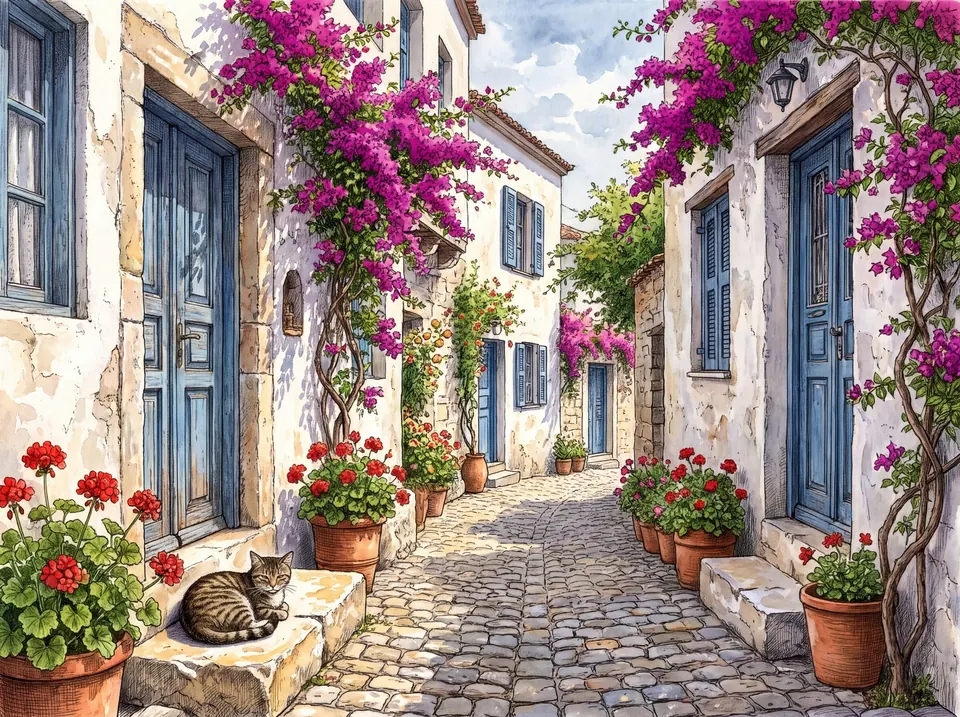
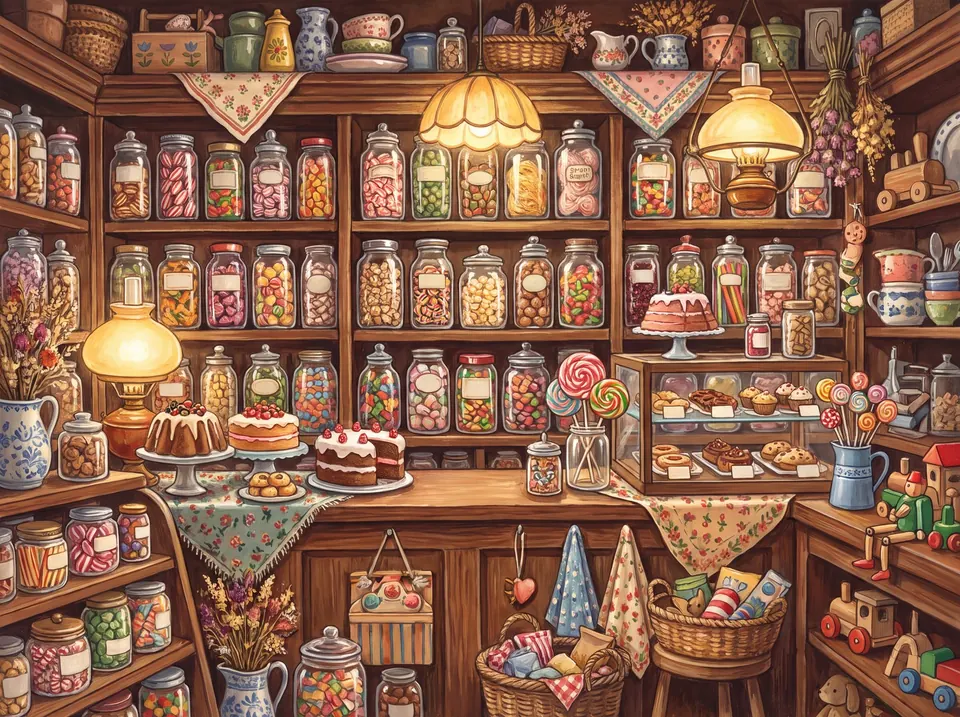
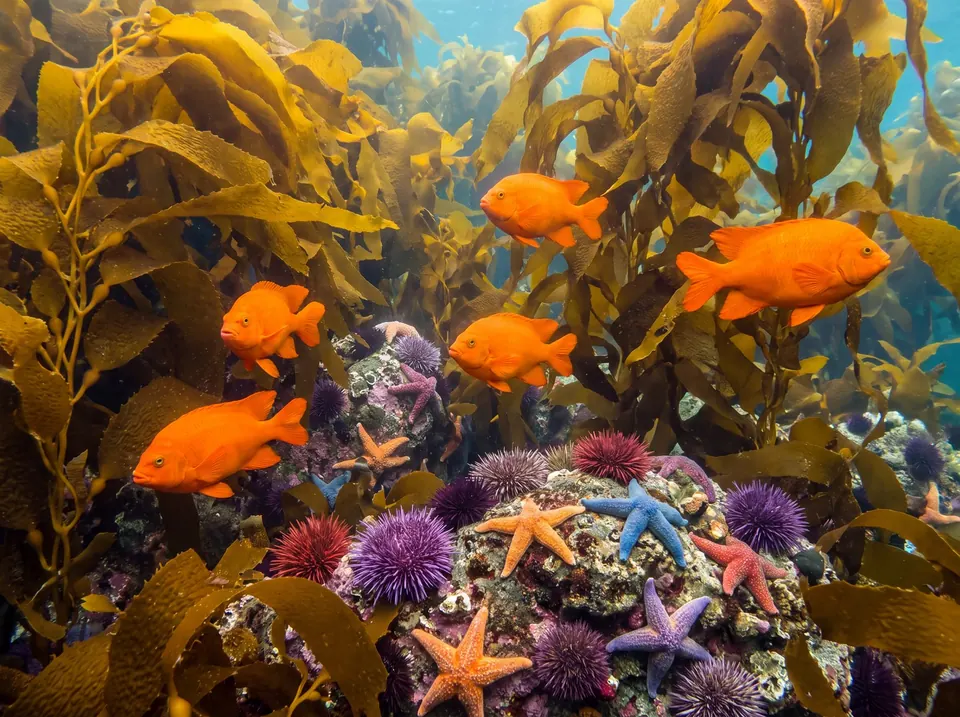
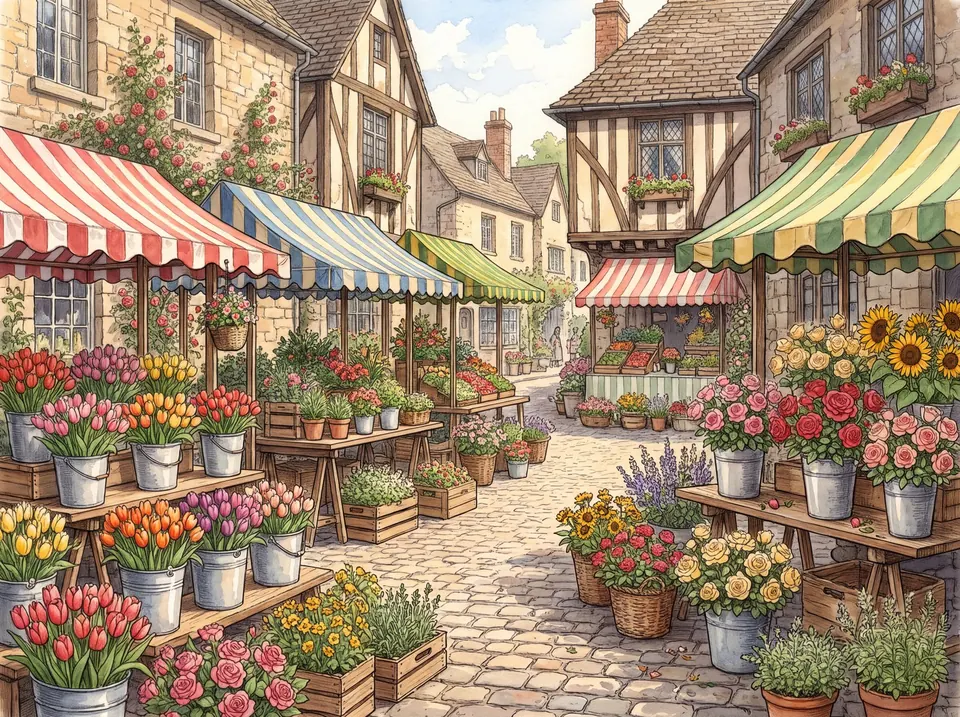
- Easier: lots of detail, varied colours and distinct areas (a market, a street of shops, a garden in bloom). Every piece has something that sets it apart.
- Harder: large areas of a single colour (clear sky, calm sea, snow), soft gradients, blurry photos or repeating patterns.
That is why illustrations made for jigsaws fill the whole picture with detail and avoid plain backgrounds. If you want a challenge, look for the exact opposite.
The cut and other options that change the difficulty
- The cut style. Classic pieces, with tabs and blanks, give clues through their shape. Square or irregular pieces change the experience a lot. We explain it in Jigsaw cut styles and piece types.
- Rotated pieces. If pieces can appear in any orientation, each has four possible positions and the puzzle becomes much harder, even with the same number of pieces.
- With or without the picture. Solving without looking at the box is a classic challenge for experts.
How much space a finished puzzle takes
If you are doing it on a table, check the dimensions before you buy. They vary by brand, but as a rough guide a 500-piece puzzle measures about 49 × 36 cm (19 × 14 in), a 1000-piece puzzle about 70 × 50 cm (27 × 20 in), a 1500-piece puzzle about 80 × 60 cm (31 × 24 in) and a 2000-piece puzzle about 98 × 75 cm (39 × 30 in). You will also need room around it for the loose pieces.
Our advice
- If it has been a while since your last puzzle, start with 300 pieces and a cheerful, detailed picture.
- When that feels easy, move up to 500 and then 1000.
- To make it harder without adding pieces, choose a picture with plain areas or turn on rotated pieces.
In Piezzle you choose the number of pieces for every game: 24, 48, 100, 150, 300, 500, 750 or 1000, with any picture or with your own photos. The daily puzzle comes in three levels, easy, medium and hard, so everyone can pick their challenge.